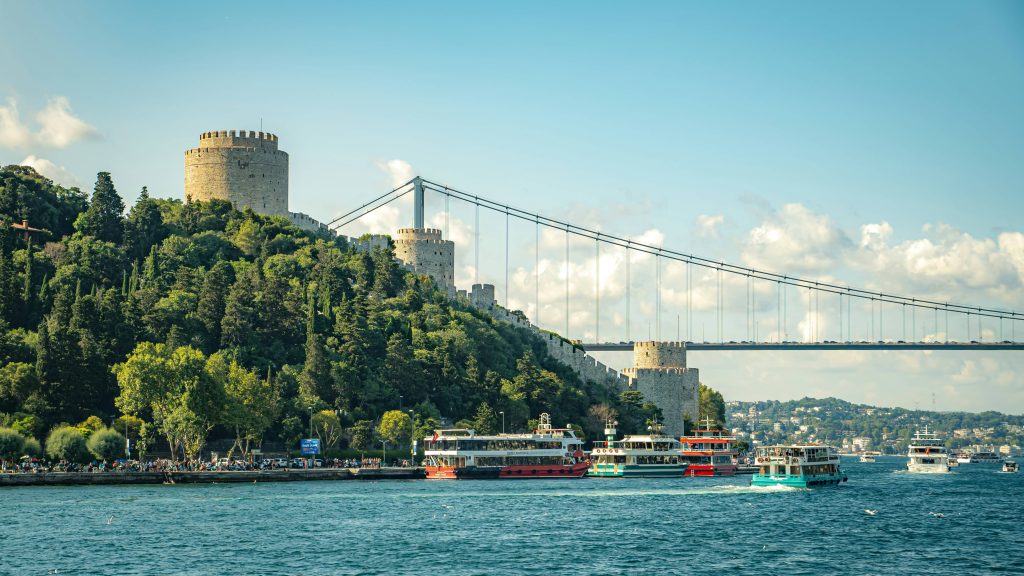
Rumeli Fortress stands at the narrowest point of the Bosphorus. Therefore, it played a decisive role in the conquest of Constantinople. Today, it remains one of the most impressive military structures of the Ottoman period.
History
Sultan Mehmed II ordered the construction of the fortress in 1452. At that time, he prepared for the siege of the Byzantine capital. For this reason, the location was carefully selected.
The fortress controlled ship traffic through the strait. As a result, reinforcements from the Black Sea could not reach the city. Shortly after, Constantinople fell in 1453.
Architecture
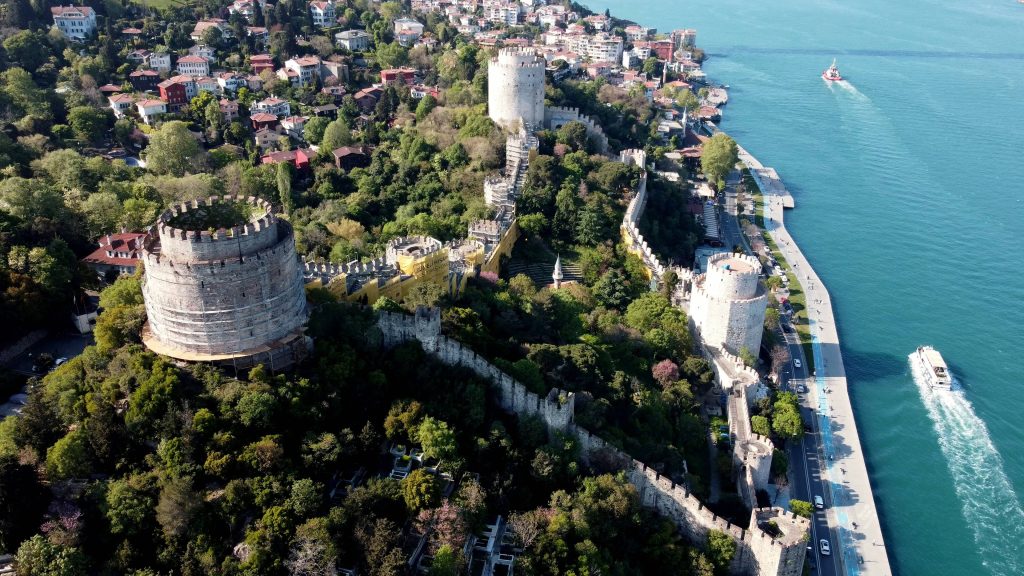
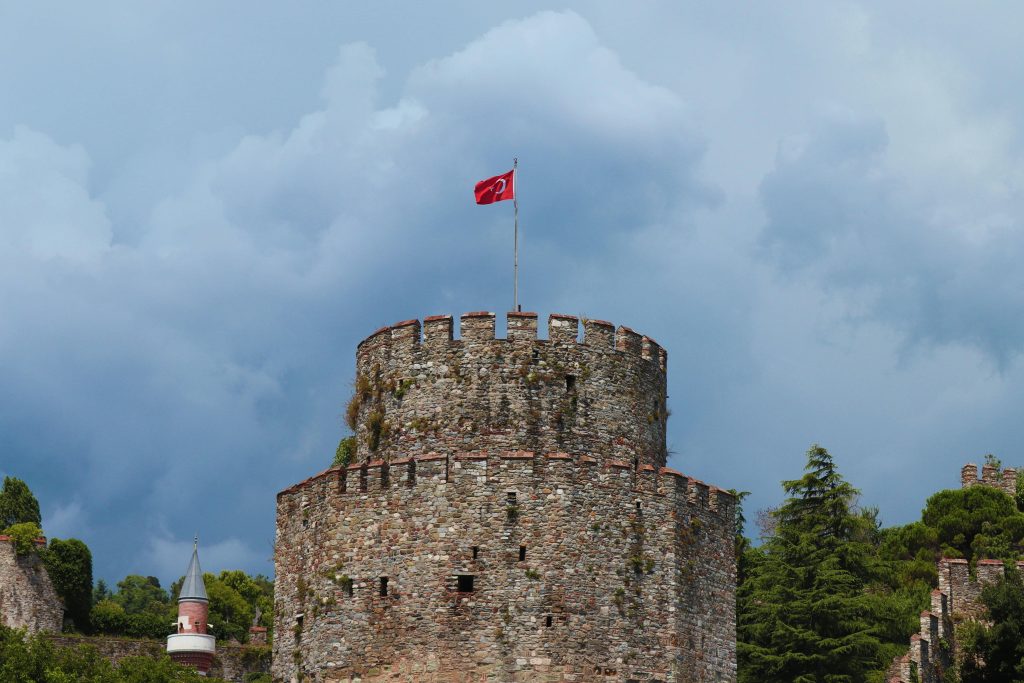
The fortress was completed in only a few months. However, it includes massive defensive walls and powerful towers. Each tower was assigned to a different commander during construction.
Because the walls follow the steep hillside, the structure appears even larger from the water.
Visiting Today
Today, the fortress functions as an open-air museum. Visitors walk along inner paths and observe the Bosphorus panorama. Meanwhile, cultural events take place during summer.
Why Visit
Rumeli Fortress explains the strategy behind the Ottoman conquest. Instead of reading history, visitors understand geography directly on site.
Moreover, the view across the strait toward Anadolu Fortress makes the story clear.
Visiting Information
Location: European Bosphorus shore Duration: 45–60 minutes Best time: Afternoon